What you bake
Cake Business Success Stories: The 3 Numbers Behind Them
See the real cost and price numbers from a home baker's first year, and check your own math.

On this page
- The first number: your real cost per cake
- How to track costs from your first sale
- The second number: the price your market will pay
- Testing your price before you list it
- The third number: your margin after every cost
- A worked example with ingredients, labor, and overhead
- What to check before your first paid order
- How to communicate price changes to customers
- Common mistakes that cost you money
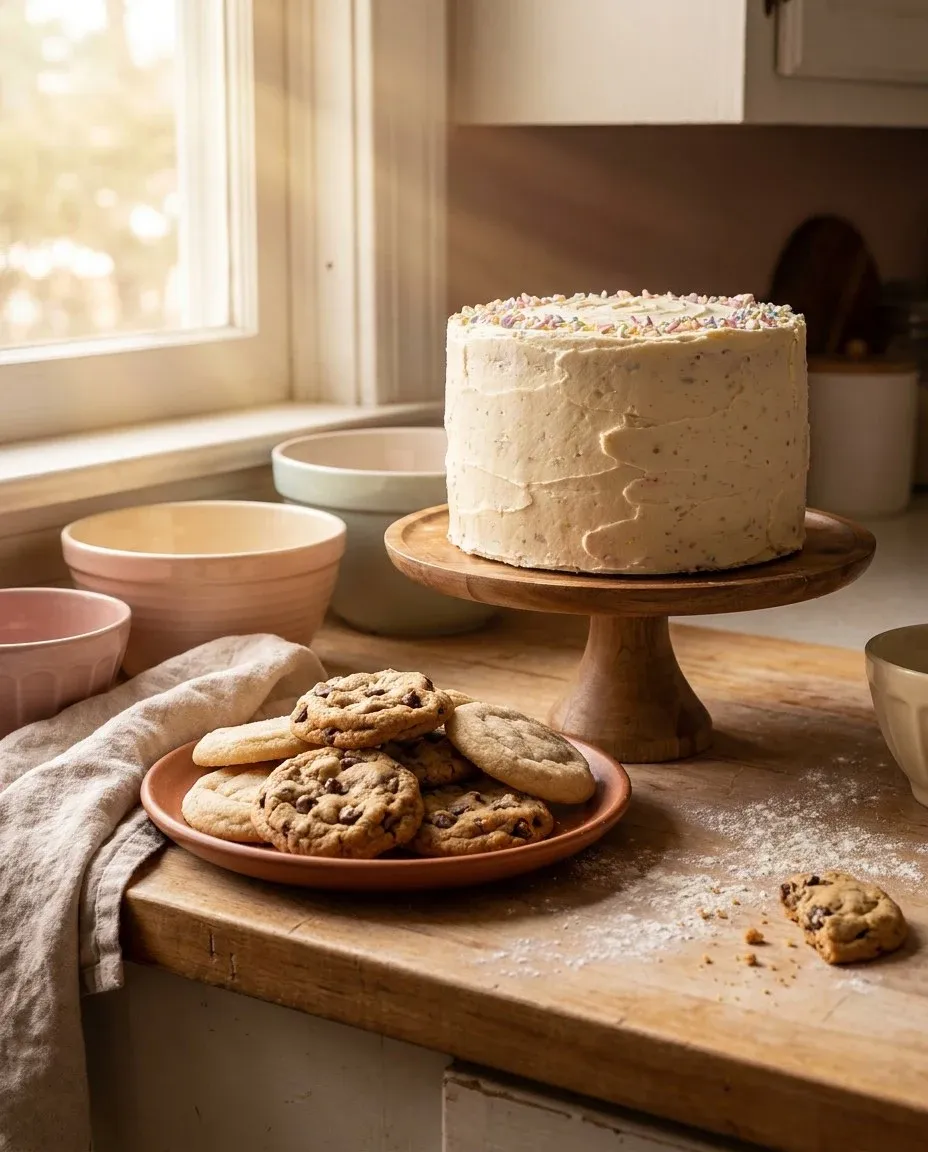
When you read a cake business success story, look past the beautiful layers. The real story is in the cost per slice, the price that covers your afternoon, and the margin that lets you buy better tools. This guide shows you the three numbers to track from your first sale. For more on the financial side, see our craft hub.
What to remember
- Success stories track the full cost: ingredients, packaging, and a fair wage for their time.
- They set a price their market will pay, which is often higher than their first guess.
- Knowing their margin lets them say yes to bigger orders and invest in their shop.
The first number: your real cost per cake
Your cost is more than flour and eggs. It is the total for everything that goes into one cake. This includes ingredients, packaging like a box and ribbon, and the power for your oven. You must also pay yourself for the time you spend shopping, baking, and decorating.
Here is a real example for a two-layer 8-inch cake that serves 12. A baker tracked her numbers for a year. Her ingredient cost was $8.50. A cake box and ribbon added $2.50. She paid herself $15 for two hours of work. Her total cost was $26. She sold it for $45. Her margin was $19, or about 42%. This margin paid for her next bag of flour and a new piping tip.
How to track costs from your first sale
Start a simple spreadsheet or notebook for each cake order. Record every item you buy for that cake, even a single egg. Note the price you paid and the amount used. This builds a cost database for future pricing. Many bakers find their first cost estimate is low by twenty percent.
Include a category for overhead costs like oven electricity, website fees, or mileage to the store. Allocate a small portion of these to each cake. For example, if your monthly overhead is $30 and you bake ten cakes, add $3 to each cake’s cost. This ensures your price covers your full business expense.
The second number: the price your market will pay
Your price must cover your cost and leave a margin. It also must be a number your customers are willing to pay. Check what other local home bakers charge for a similar cake. Look at farmers market prices and local Facebook groups. Your price is the meeting point of your cost and their budget.
Find your total cost
Add ingredients, packaging, and your labor wage. For the example cake, that was $26.
Add your target margin
A common margin for home bakers is 40% to 60%. On a $26 cost, a 50% margin adds $13.
Check the local price
See if $39 fits your market. If others charge $45, you have room. If they charge $35, check your costs or adjust your margin.
Testing your price before you list it
Before you post your prices online, test them with a few trusted friends or family. Describe the cake and ask what they would expect to pay. Their answer shows if your price aligns with perceived value. A price too low can signal low quality. A price too high needs a clear quality story.
Consider a soft launch with your first few customers. Offer your cake at your target price to gauge their reaction. If they pay without question, your price fits. If they hesitate, ask for feedback. Use this data to confirm or adjust your public pricing.
The third number: your margin after every cost
Your margin is what is left after you subtract all costs from your price. This is your profit. It is not extra spending money. It is the fund that replaces your mixer, buys your next batch of boxes, and lets you take a weekend off. A clear margin tells you if an order is worth your time.
In the example, the $19 margin on a $45 sale is strong. It means for every $100 in sales, about $42 stays after costs. This baker could see that a $60 wedding cake with $35 in costs was a better use of her time than a $30 cupcake order with $22 in costs. She used her margin to decide what to bake next. For a deeper dive into tracking, read Cake Business Tracker: 5 Numbers and Your Real Hourly Pay.
A worked example with ingredients, labor, and overhead
Let’s expand the earlier example with overhead included. For a two-layer 8-inch cake, the ingredient cost is $8.50. Packaging is $2.50. Labor for two hours at $15 per hour is $30. Monthly overhead for utilities, website, and car use is $40. If she bakes eight cakes a month, that allocates $5 of overhead per cake.
Her total cost is now $8.50 + $2.50 + $30 + $5 = $46. She sells the cake for $65, a price checked against her local market. Her margin is $65 - $46 = $19. This $19 margin is 29% of the sale price. It funds her business growth. This example shows why counting all costs is non-negotiable.
What to check before your first paid order
Before you celebrate your first sale, check your local cottage food rules. Each state has different laws about what you can sell and where. You may need a simple registration or a kitchen inspection. Know the rules for your state. Also, have a simple way to track orders and money. A notebook or a basic spreadsheet works. The goal is to know your numbers from day one.
How to communicate price changes to customers
When your costs rise, your prices must follow. Explain changes to your customers with a brief, honest note. Mention a specific ingredient cost increase or a new packaging standard. Most customers understand small adjustments. Announce the change two weeks before it takes effect for existing clients.
Frame the change around improved value. For example, a price increase might fund better quality chocolate or sturdier boxes. This turns a necessary business move into a customer benefit. Transparency builds trust and retains your client base through changes.
Common mistakes that cost you money
New bakers often underprice their time. They charge for ingredients and a few dollars extra. After a month, they are tired and have no money for new pans. Another mistake is not counting packaging. A $3 box turns a $10 margin into a $7 margin. Use your first few sales to learn your real costs. Adjust your prices quickly. Your customers will understand a small increase if you explain it covers better boxes or lets you offer more flavors.
Also, avoid the trap of customizing every order for free. A simple color change is fine. A complex sculpted cake is a different product with a different price. Know what is included in your base price and what costs extra. Write it down or have a menu. This keeps you fair and profitable. For help describing your business, see Cake Business Description: What to Write Before You Bake.
Try the free bake pricing calculator
Free, no signup.
Common questions
How do I find out what to charge in my area?
Search for 'custom cakes' in your town on Facebook or Instagram. Note the prices for a basic two-layer cake. Visit a local farmers market and ask bakers their price for a dozen cupcakes. This gives you a local price range to work within.
What if my costs are higher than others' prices?
First, double-check your ingredient and packaging costs. If they are correct, simplify your recipe or find less expensive packaging. Do not start by cutting your own pay. A higher quality ingredient can justify a higher price if your market values it.
Should I offer a discount for my first customers?
A small 'thank you' discount is fine, but keep it clear and limited. Do not set a price you cannot sustain. Explain that the introductory price is for your first ten orders only, then it will change to your standard rate.
How often should I review my prices?
Review your prices every six months or whenever your ingredient costs jump. If butter prices rise 20%, your cake price needs to reflect that. Communicate changes to your regular customers with a simple note.
What is a realistic margin for a new home bakery?
A margin between 30% and 50% after all costs is a common target for a sustainable new business. This range allows for growth and unexpected expenses while remaining competitive.
How do I account for failed bakes or practice runs?
Factor a small percentage for waste into your ingredient costs. Many bakers add 5% to 10% to cover mistakes, taste tests, or imperfect results. This cost belongs in your pricing, not your margin.
General information, not legal or tax advice. Check your state's cottage food laws for current rules.